The Upset Heard Round Florida
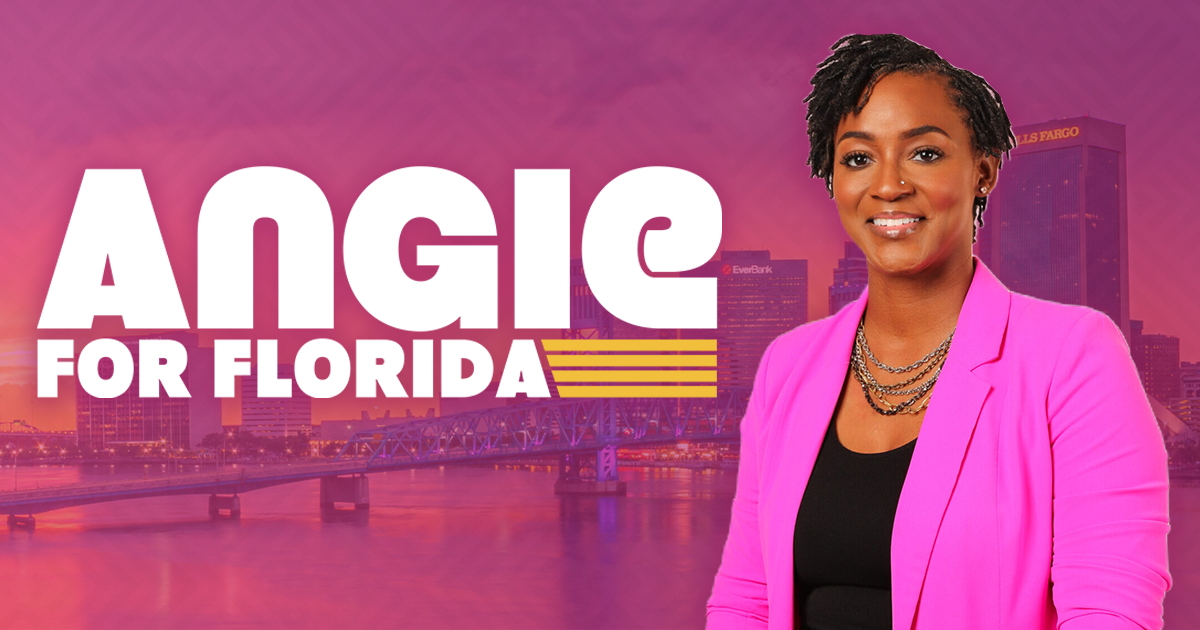
Angie Nixon just did something almost nobody thought was possible. On August 18, 2026, the Jacksonville state representative beat Alex Vindman, a retired Army lieutenant colonel and impeachment-era national security aide, in Florida’s Democratic Senate primary — and she did it while raising roughly $975,000 to his $16.3 million.
Read that again. Vindman outraised her by more than 16 to 1, and she still won by double digits.
Nixon’s victory also carries a title nobody in Democratic politics has held before: she’s the first member of the Democratic Socialists of America to win a major-party nomination for statewide office. On primary night, she summed up the whole campaign in one line: “We showed the world what organized people can accomplish.” Given the fundraising gap, that’s not a slogan — it’s a fact.
If you’re just now discovering her name in your feed, here’s everything you need to know about who she is, how she pulled this off, and what she’s promising to do if Florida sends her to the Senate.
From Jacksonville to the Ballot — Who Is Angie Nixon?
Nixon was born Angela Nixon on February 27, 1984, and she grew up in Jacksonville. She still represents the Moncrief neighborhood where she came up, which tells you something about how she thinks about roots and loyalty. She graduated from Stanton College Preparatory School and later earned a political science degree from the University of Florida.
Her path into politics started small. She interned for then-City Councilwoman Mia Jones and, in her own words, “really just fell in love with public service.” That internship turned into a career: she went on to serve as executive director of a coalition focused on building power in underrepresented communities before ever holding elected office herself.
Nixon’s life outside the Capitol is just as central to her story as her legislative record. She co-founded the Melanin Market, an outdoor market that connects small business owners with healthy food options and local resources. She co-owns Cafe Resistance, a Jacksonville bookstore that doubles as a community gathering spot. And she co-wrote a children’s book with her own daughter — The Adventures of Moxie McGriff — after her daughter struggled with self-esteem about her natural hair at age seven. The two turned that struggle into a comic-style story about a girl whose Afro puffs give her superhero powers. The book went on to win Florida’s One Spark award.
She’s also a wife, a mother of two, and a stepmom of three. Fans who’ve followed her career know this isn’t a side note — it shapes how she talks about affordability and the cost of raising a family in Florida.
Her Record in Tallahassee
Nixon has represented Florida House District 13 since 2020, and Democratic colleagues consider her one of the most progressive members of the caucus. But if you go looking for a long list of bills she’s passed, you won’t find one — and that’s by design, not by accident.
Florida Republicans have controlled the legislature for years, which means a progressive Democrat from Jacksonville isn’t in the business of getting bills signed into law. Nixon built her reputation a different way: through visible, unapologetic opposition.
In 2022, she led a protest on the House floor against a GOP-drawn congressional map that eliminated two districts where Black residents held a plurality. In April 2026, the Florida House reprimanded her for grabbing a pink megaphone and disrupting a vote on redistricting legislation. The following month, she was arrested during a sit-in at Governor Ron DeSantis’s office, again protesting the state’s redrawn maps.
She’s earned plenty of enemies along the way. She once described herself as “the biggest pain in Ron DeSantis’ ass,” and Republican Party of Florida Chair Evan Power mocked her Senate ambitions on social media before she’d even announced. Her supporters read the same track record as proof she won’t back down once she’s in Washington.
How She Beat a $16 Million Campaign
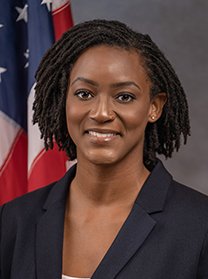
This is the part of Nixon’s story that deserves way more attention than it’s gotten. A 16-to-1 fundraising gap in a statewide Senate race should be an unwinnable hole. Nixon climbed out of it anyway.
Her campaign finance filings show total receipts of $974,844.71, almost entirely from individual contributions. She spent $709,866.35 and finished with $264,978.36 still in the bank — a sign of a lean, disciplined operation rather than a campaign scrambling to keep the lights on. Compare that to Vindman, who spent more than $2 million on advertising alone in the primary. In a state as large as Florida, that kind of money doesn’t even buy a week of statewide airtime.
The gap in strategy explains the gap in dollars. Vindman ran a high-spend, high-visibility campaign built around his national profile as a former impeachment witness. Nixon ran on organizing: face-to-face outreach, labor connections built over years as a union organizer, and a message aimed squarely at people who felt locked out of the conversation. She put it this way after the win: “We put in the work, and we went out and we centered people and the issues that concerned them.”
One more detail worth noting: Nixon won without endorsements from the most nationally recognized progressive names, Bernie Sanders and Alexandria Ocasio-Cortez. Instead, she built her coalition with Representatives Maxwell Frost, Rashida Tlaib, Ilhan Omar, and Ayanna Pressley, plus a deep bench of Florida elected officials. That’s a meaningful signal about where her real support base sits within the progressive movement.
What She Believes — Her Platform Going Into November
Nixon’s campaign centers on one word: affordability. She’s built her entire pitch around wages, cost of living, and working-class voters who she says have been left behind while, in her words, “the rich get richer.”
Her most concrete promise is healthcare. Nixon has said that on her first day in office, she’ll file legislation to reinstate the enhanced Affordable Care Act subsidies that expired at the end of 2025. That’s not an abstract policy line for Florida — the state leads the nation in ACA marketplace enrollment and also carries one of the highest uninsured populations in the country. For a huge number of Floridians, this promise touches their monthly budget directly.
Nixon is also a member of the Democratic Socialists of America and the Working Families Party, and she joined DSA during the campaign itself rather than before it. That’s worth understanding in practical terms: it signals her commitment to organized labor, universal healthcare, and economic policy built around working people, not a specific European-style platform. She’s also taken stances that go beyond domestic economics — in November 2023, just weeks after the October 7 Hamas attacks, she publicly called for a ceasefire in the Israel-Hamas war, a position that drew controversy at the time and remains part of her public record.
The Historic Stakes of November
Win or lose in November, Nixon has already made Florida political history. She’s only the second Black woman ever to win a Democratic Senate nomination in the state. If she wins the general election, she becomes the first Black lawmaker and the second woman ever to represent Florida in the U.S. Senate.
Her opponent is Republican Senator Ashley Moody, Florida’s former attorney general, whom Governor DeSantis appointed to the seat after Marco Rubio left to become Secretary of State. That detail matters: Moody has never actually run for this Senate seat before. November will be her first time facing voters for it directly.
The honest read on Nixon’s odds: this is a hard race. Election forecasters currently rate Florida as a likely or solid Republican state, and for more than a decade Republicans there have built their brand partly around warning voters away from anything labeled “socialist.” Nixon’s win in the primary defied that pattern in a way that stunned even Florida Democratic Party Chair Nikki Fried, who had downplayed the chances of a progressive insurgent before the results came in. Whether that same energy translates to a general election in a redder environment is the real question heading into November.
How to Follow or Support Angie Nixon’s Campaign
Nixon’s primary win happened almost entirely on small-dollar donations and grassroots organizing, not massive PAC money. If her story resonated with you, following her campaign channels and considering a donation carries real weight for a candidate who’s proven she can do more with less than almost anyone in recent memory.
Whatever happens in November, Angie Nixon has already changed what people assumed was possible in Florida politics. That’s a story worth watching all the way through.