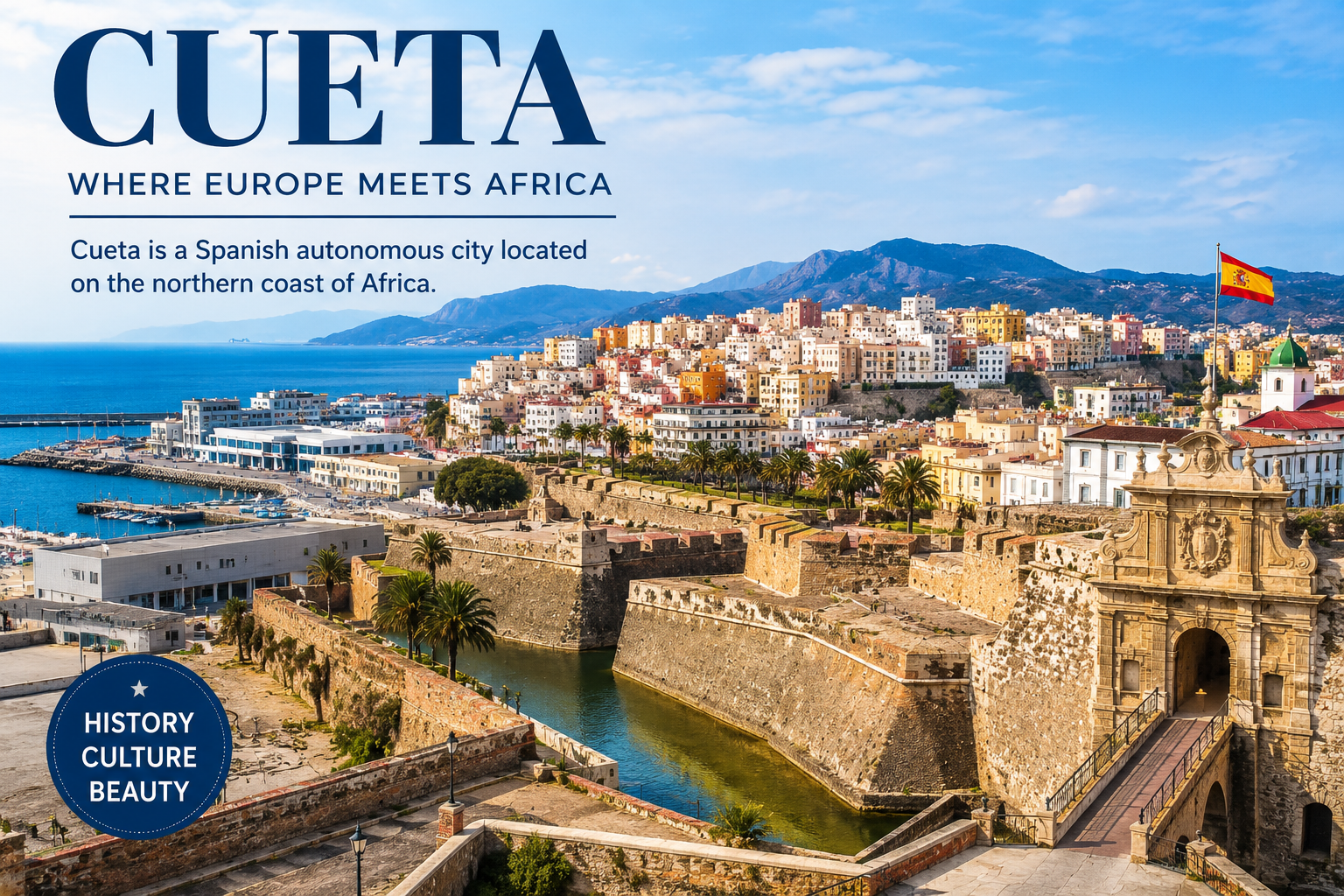
The Strategic Location of Ceuta
Ceuta is a small Spanish autonomous city located on the northern coast of Africa. Although it is geographically part of the African continent, Ceuta is politically and administratively a part of Spain. This unique position makes it one of the most fascinating places in the world, where European and African cultures blend.
Covering an area of just over 18 square kilometers, Ceuta lies along the Strait of Gibraltar, one of the world’s busiest waterways. The city is separated from mainland Spain by the Mediterranean Sea and shares a land border with Morocco. Because of its location, Ceuta has played an important role in trade, military defense, and cultural exchange for thousands of years.
Throughout history, Ceuta has been ruled by several civilizations, including the Phoenicians, Romans, Byzantines, Arabs, Portuguese, and eventually Spain. Each civilization left behind monuments, traditions, and architectural styles that continue to shape the city’s identity today. This rich historical background makes Ceuta an attractive destination for travelers interested in history and culture.
Today, Ceuta serves as both a strategic military location and a gateway between Europe and Africa. Its busy port welcomes passengers and goods traveling between Spain, Morocco, and other Mediterranean countries. The city’s multicultural atmosphere reflects centuries of interaction between different religions, languages, and traditions.
History, Culture, and Popular Attractions
Ceuta offers visitors a mix of historical landmarks, beautiful coastlines, and vibrant local culture. One of its most famous landmarks is the Royal Walls of Ceuta, a well-preserved fortress originally built to defend the city from invasions. These impressive walls, surrounded by a navigable moat, showcase the city’s military importance throughout history.
Another popular attraction is Mount Hacho, a hill overlooking the city and the Strait of Gibraltar. Many historians believe it may have been one of the legendary Pillars of Hercules mentioned in Greek mythology. From the summit, visitors can enjoy breathtaking panoramic views of both Europe and Africa on clear days.
The city is also home to several museums, churches, mosques, and cultural centers that reflect its diverse heritage. Walking through Ceuta’s streets, visitors can experience a unique combination of Spanish, Moroccan, Arab, Jewish, and Christian influences. Local festivals celebrate this diversity through music, food, and traditional performances.
Ceuta’s coastline is another major attraction. The city features clean beaches, marinas, and scenic waterfront promenades that attract both residents and tourists. Water sports such as sailing, diving, and fishing are popular due to the city’s location between the Mediterranean Sea and the Atlantic Ocean.
Food lovers will also enjoy Ceuta’s culinary scene. Restaurants serve a variety of Spanish seafood dishes alongside North African specialties. Fresh fish, grilled meats, tapas, couscous, and traditional pastries highlight the city’s multicultural flavors.
Modern Ceuta and Its Global Importance
In the modern era, Ceuta continues to play an important role in politics, commerce, and international relations. As part of Spain and the European Union, the city enjoys modern infrastructure, healthcare, and education while maintaining its unique African setting.
Ceuta’s economy relies on trade, tourism, port activities, government services, and retail businesses. Its tax advantages also attract shoppers from neighboring regions. The city’s port remains one of its most valuable assets, supporting transportation and commercial activity throughout the Mediterranean.
One of the most discussed aspects of Ceuta today is its border with Morocco. The city has become an important point for migration between Africa and Europe, making it a significant location in discussions about border management and international cooperation. Spanish and European authorities continue working to balance security, humanitarian concerns, and cross-border trade.
Despite these challenges, Ceuta remains a peaceful and welcoming city that celebrates cultural diversity. Residents from different backgrounds live together, creating a community where multiple languages, religions, and customs coexist.
Ceuta stands as a remarkable example of how geography and history can shape a city’s identity. Its strategic location, rich heritage, impressive landmarks, and multicultural society make it one of the most distinctive destinations in the Mediterranean. Whether admired for its history, scenic beauty, or cultural richness, Ceuta continues to connect two continents while preserving its unique character for future generations.